
The 2026 Formula 1 Japanese Grand Prix delivered drama, danger and a historic milestone, as Kimi Antonelli claimed victory at Suzuka to become the youngest championship leader in F1 history.
Across the weekend at Suzuka Circuit, fans were treated to unpredictable strategy, wheel-to-wheel battles and a defining moment in the early title race.
Qualifying saw Antonelli continue his incredible start to the season by securing pole position, underlining Mercedes’ early dominance.
However, the race start told a very different story. Both Mercedes drivers struggled off the line, with Antonelli dropping down the order while Oscar Piastri surged into the lead ahead of Charles Leclerc.
From there, the opening phase became a strategic battle. Piastri controlled the race confidently at the front, while George Russell and Antonelli fought their way back into contention.
Pit stops began early, with Lando Norris stopping first and triggering a chain reaction among the frontrunners as teams attempted to avoid being undercut.
The defining moment of the race, however, came on lap 20 — and it was a frightening one.
Haas driver Oliver Bearman suffered a huge crash at the high-speed Spoon Curve after closing rapidly on a slower car. Forced to take evasive action, he lost control on the grass and slammed into the barriers in a massive impact at over 190mph. Remarkably, he walked away with only minor injuries, but the incident sparked immediate concern across the paddock about the speed differentials created under the new regulations.
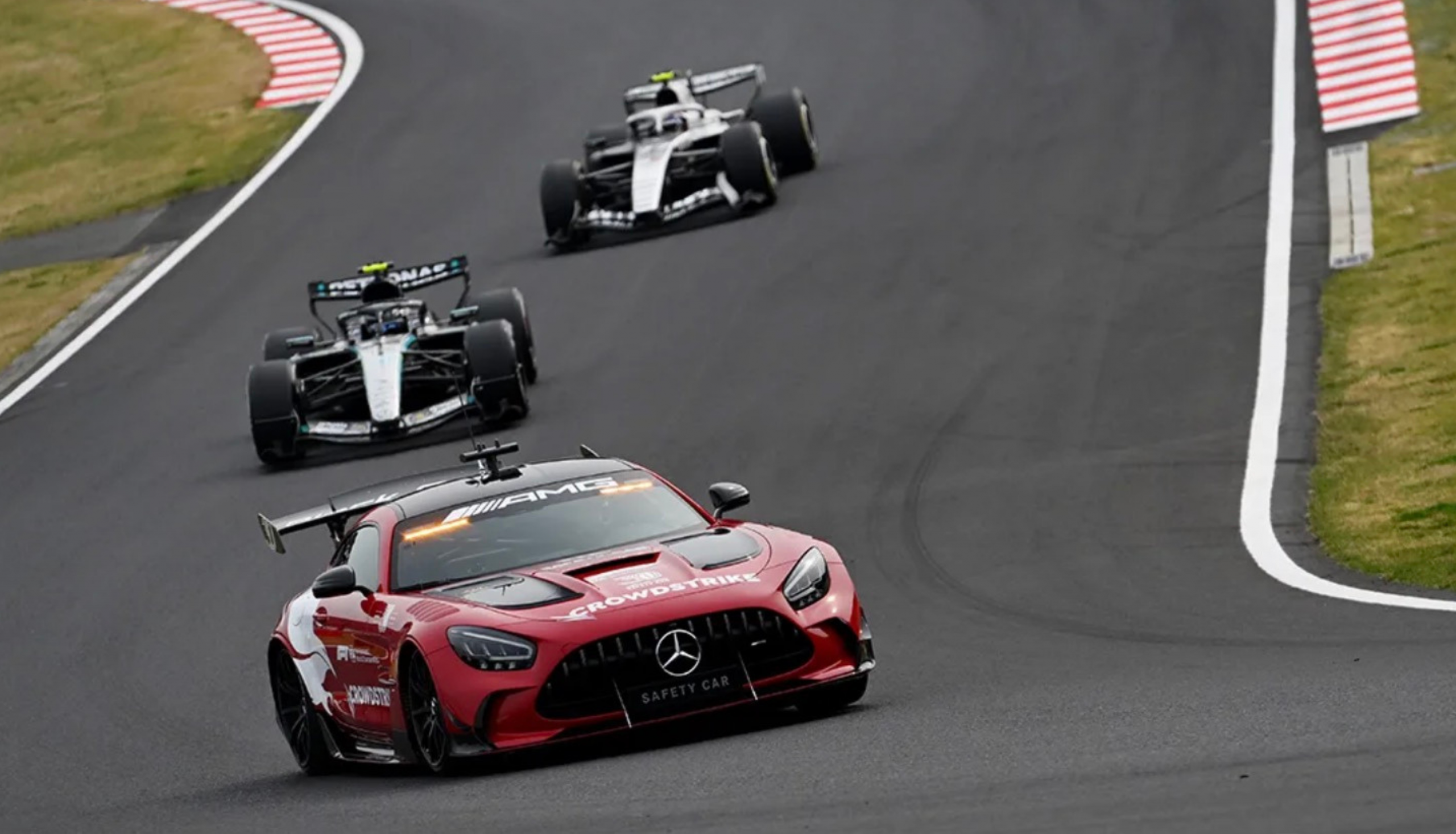
The crash brought out the Safety Car — and that changed everything.
Antonelli, who had recovered into contention, capitalised perfectly. Pitting under the Safety Car allowed him to jump ahead of his rivals and effectively take control of the race. From there, the 19-year-old showed composure beyond his years, managing the restart brilliantly and pulling clear of Piastri.
Behind him, the midfield battles intensified — none more so than within Ferrari. Leclerc and Lewis Hamilton were locked in a tense back-and-forth throughout the race, with the pair trading positions through strategy and on-track moves.
At one stage, Hamilton appeared to have the upper hand following the pit cycle, but Leclerc responded with a decisive late overtake to reclaim the position and secure a podium finish. The duel highlighted Ferrari’s competitiveness but also hinted at a potential intra-team rivalry developing.
Elsewhere, Norris fought his way past Hamilton in the closing stages, while Max Verstappen endured a more frustrating afternoon. After starting lower down the grid, the four-time world champion could only recover to eighth place, spending much of the race stuck in traffic and struggling to make progress.
Speaking after the race, Verstappen did not hold back in his assessment. He pointed to the impact of the new regulations and the difficulty of overtaking, suggesting the racing felt “unnatural” at times and expressing concern over the speed differences between cars — concerns only heightened by Bearman’s crash.
While measured in tone, his comments reflect a growing unease among drivers about how the 2026 rule changes are affecting both safety and racing quality.
The early pit strategy phase proved especially cruel for Russell. The Brit had worked his way into a strong position and looked set to challenge for the podium, only to pit just one lap before the Safety Car was deployed following Bearman’s crash.
The timing could hardly have been worse — dropping him out of contention as rivals gained a significant advantage by stopping under neutralised conditions. In a race ultimately defined by strategy swings, it was a pivotal moment that effectively ended Russell’s hopes of fighting at the front, where the story was all about Antonelli.
Crossing the line for his second consecutive victory, the Italian not only secured back-to-back wins but also took the lead of the Drivers’ Championship — becoming the youngest driver ever to do so. It marks a remarkable rise for the teenager, who has quickly established himself as a genuine title contender just three races into the season.
Despite finishing second, Piastri was one of the stars of the weekend. After a difficult start to his season, the McLaren driver delivered a composed and competitive drive, leading the race for much of the opening stint and finally completing a full race distance.
His performance earned him Driver of the Day, highlighting both his resilience and McLaren’s improving pace.

Suzuka ultimately proved to be a turning point weekend — not just in the standings, but in the rhythm of the season itself. With the planned Middle Eastern rounds cancelled and not replaced on the calendar, Formula 1 now faces an unusual five-week break before the next Grand Prix.
The extended pause gives teams time to regroup, analyse the impact of the new regulations and, in some cases, address growing concerns around safety.
