
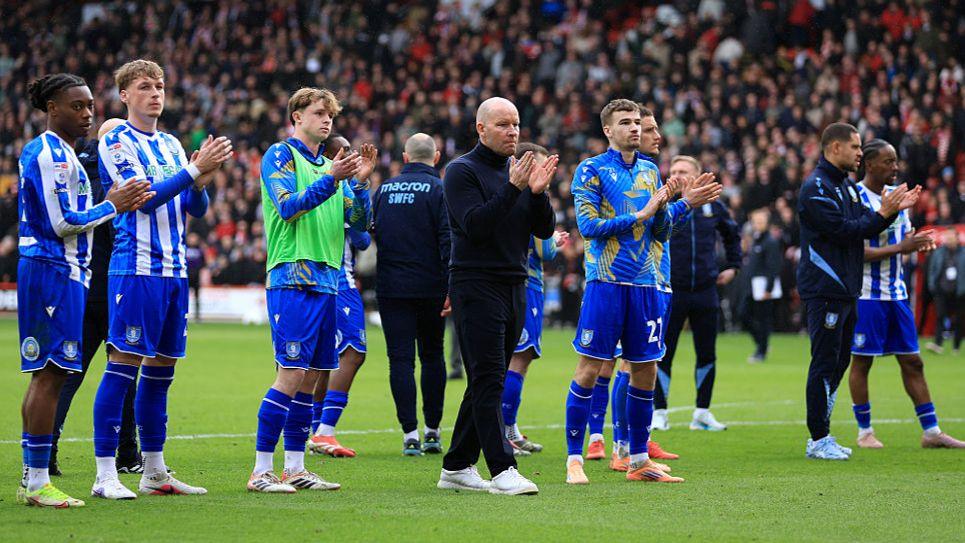
Sheffield, UK — In what is being described as one of the most tumultuous seasons in the club’s long history, Sheffield Wednesday have been relegated from the EFL Championship with weeks of the campaign still to play, a feat unprecedented in the English professional game.
Wednesday’s fate was sealed on February 22 following a 2–1 defeat to city rivals Sheffield United at Bramall Lane, mathematically condemning the Owls to League One with 13 fixtures remaining.
Prior to this, the most notable instances of early demotion came decades earlier but with fewer games remaining on the calendar.
The Owls’ slide into the third tier was not built on poor league form alone.
A combination of severe financial troubles and administrative turmoil off the pitch saw the club placed into administration in October, triggering punitive action from the EFL.
Wednesday were initially handed a 12-point deduction, followed by a further six points for regulatory breaches, leaving them languishing deep in negative figures.
On the pitch, results were equally grim. Only one league win in 33 games and a long goal drought underlined how far the once proud club had fallen, with their points tally at the time of relegation still in negative territory.
The psychological blow of going down in February has been compounded by significant uncertainty over the club’s future.
A proposed takeover by a consortium led by professional poker player James Bord collapsed just days after relegation was confirmed, leaving administrators scrambling to find credible investors amid growing fan concern.
While Wednesday’s early relegation is a record in the modern football era, it isn’t the only extreme example of clubs enduring disastrous seasons:
- Peterborough United hold an unusual historical note for being relegated from the third tier in 1967–68 with 27 matches still to play, albeit after a 19-point deduction for rule breaches rather than sporting results alone.
- Cambridge United (1984–85) and Doncaster Rovers (1997–98) suffered relegation from the third division with eight games to spare — a remarkable, though less severe, early exit.
The broader landscape of English football has seen a worrying trend of historic clubs wrestling with financial sustainability in recent years, leading to points deductions, administration issues, and difficult battles to retain league status.
Derby County’s drop out of the Championship after a 21-point penalty in 2021 and other high-profile demotions underscored how off-field mismanagement can be as potent a threat as any on-pitch rival.
As Wednesday prepare for life in League One, supporters will hope that the club can stabilise and rebuild. For a side with four English league titles in its history, this moment marks a reset rather than the end, albeit one born from the harshest of seasons.
