
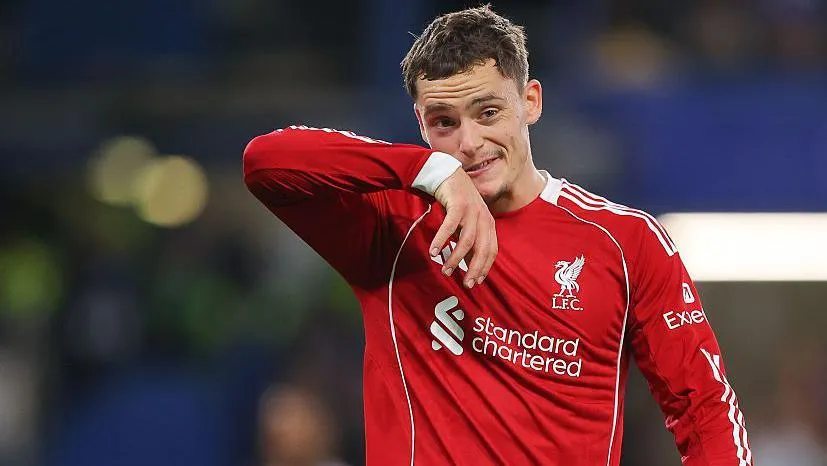
“About 46% of Premier League transfers fail”, says Dr Ian Graham, Liverpool’s former director of research and head of data.
Since 2014, transfer fees have inflated by 116%, making footballers more expensive than ever. And just this summer, Premier league clubs spent over £3 Billion on players, the record transfer fee being broken twice.
Yet, despite clubs being increasingly diligent before spending this money on players, so many who move for big fees seem to be branded as “flops”. But what makes a transfer a failure?
Grahams research uses an incredibly simple, and generous, algorithm to decide this. Simply, a “success” is appearing in 50% of premier league games for their club over the next two years, a “failure” is to appear in less than 50% of matches in that time period. Generous right? well yeah, even Fernando Torres at Chelsea would be considered a success under this criteria. But even still, 46% of Premier League transfers don’t achieve this.
So why are these players failing?
On a footballing level, the explanation can be as simple or as complex as you’d like. A player signing for a new club might not suit the style of play being asked of them, they might simply not be as good as the buying club previously thought, or the manager might not be playing them in the correct position. The list is almost endless, but a player not being as good as previously thought is one that Graham attempts to measure.
He says that “there’s a 40% premium on premier league experience, the same player, the same ability, 40% premium on the transfer fee”, naturally, this leaves clubs shopping from outside the league in search for better value. But this approach poses new issues for clubs recruitment teams, how can we be sure a players ability will carry over into the so called “best league in the world?”
Graham describes a sort of “exchange rate” between leagues, allowing clubs to measure the expected difference in performance for a player moving into the Premier League. They do this based on data collected from European competition when teams face the English clubs.
Speaking on Victor Gyokores switch from Sporting to Arsenal in the summer, he said, “you expect about a 35% average drop in output on a per 90 basis, for a player coming from that league (Liga Nos)”. but its different everywhere, for example the MLS is about 50%”.

Further looking at the difference between playing in one league to another, we can quantify these disparities. We often associate the Premier League with being the quickest and most intense in Europe, with the Bundesliga similarly intense, whilst the Italian Serie A is seen as slower and more defensive, and the Spanish and French leagues somewhere in between. But the data from OPTA offers us a more nuanced perspective.

We can see how the French Ligue 1 and the Spanish La Liga are in the expected middle ground, whilst the Bundesliga is typically a quicker more direct game, although is following the same trend as both the Premier League and Italian Serie A and moving toward being slower and more intricate. This can help explain why players often struggle moving between leagues.
Using the Bundesliga as an example, forwards in Germany will see more space afforded to them as comes naturally in a faster more direct game, hence why many struggle when moving to the Premier League where teams progress the ball in a slower manner. There is simply less space to exploit.
But football isn’t played on a spreadsheet, and despite clubs having access to all of these algorithms and data points, they’re still seeing their multi-million pound assets underperform. So is there something beyond the football, and beyond what data can measure that is responsible for this?
Well psychological studies would suggest that there is.
A study for “Frontiers in sports and active living” looked at 20 basketball players in an attempt to determine what caused poor performance after “mutation” (moving between clubs).
These changes disrupt the social ecosystem an athlete exists within. New teammates means finding a new position in the social hierarchy, new coaching means new authority, and the disruption to social networks, like moving away from family and friends, all create “psychological stressors”.
How a player interprets these stressors (appraisal) is crucial to performance. Those who view stressors as a “challenge” are more likely to resist negative impact, whilst those who view them as a “threat” are likely to see hits to their performance. They call this the “coping response”.
Where stressors are appraised as threats, the consequences are identified as anxiety, cognitive overload, and avoidance tendencies, often leading to a sharp decline in performance. Second guessing decisions on the pitch, avoiding social interactions and a fixation on errors or approval are all effects of this; no doubt damaging performance.
Footballers are perhaps even more vulnerable to these effects than basketball players. Transfers between football clubs often include a new club in a new league, in a different country speaking a different language. All of these things create significant psychological stressors for a person. Players do not simply lose ability overnight, rather a clubs ability to integrate new players into their environment is of paramount importance.
So the data is helpful, it’s an an excellent predictor of outcomes and measure of performance. But it’s limited in that you cant quantify psychology on a graph. Perhaps it’s not so much clubs consistently signing the wrong players, but more clubs not having the system in place to integrate these players effectively into their environment. Data sees performance but what it cant see is the human layer beneath.
