

How could the American midterm elections impact the UK, Europe, and the wider world?
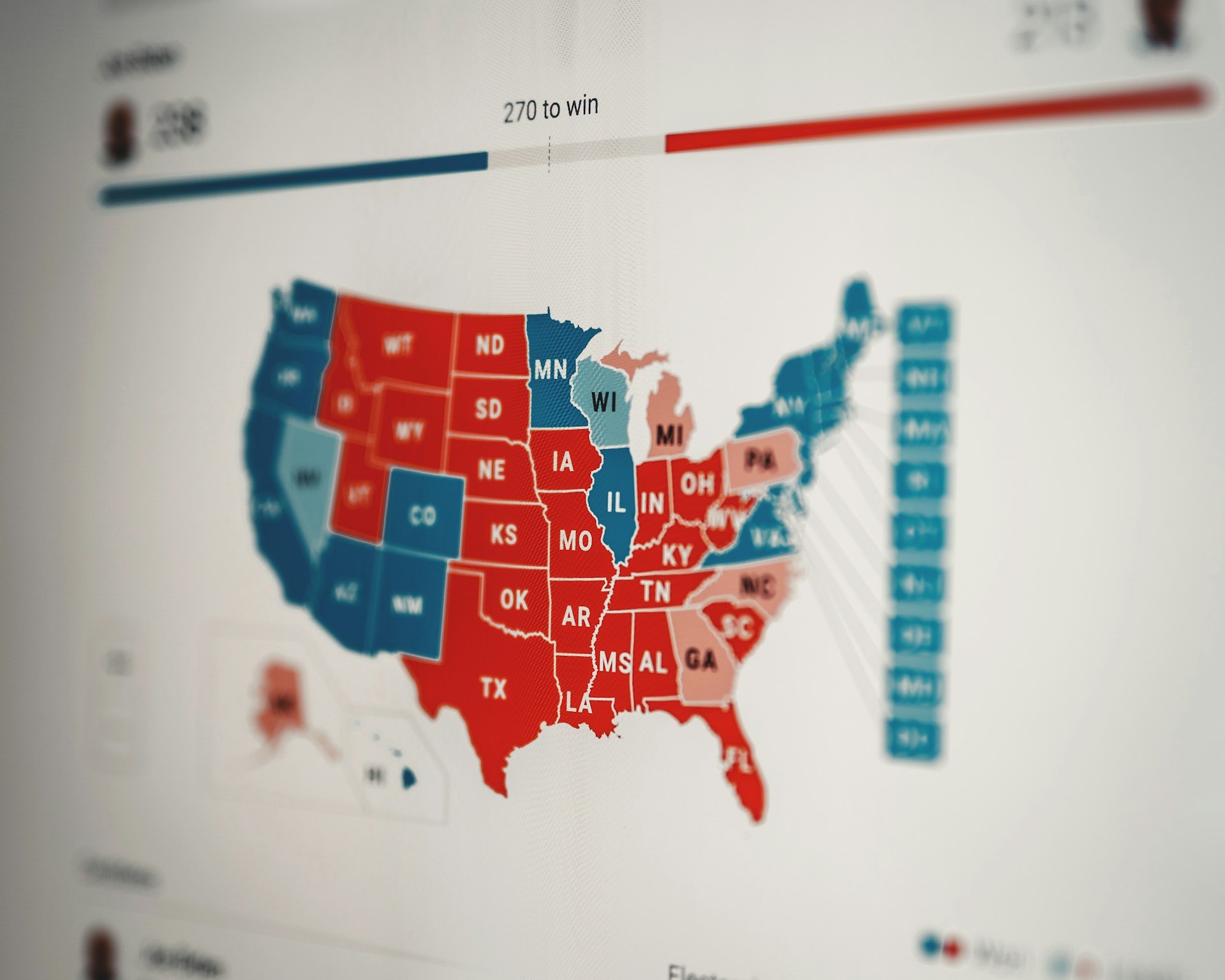
Today, the American people will go to the polls for the second midterm of Donald Trump’s presidency. The outcome of this election could significantly alter his agenda, his level of effective control within the government, or even his ability to govern.
But why is the result of this election so important and how will it impact people here in the UK and around the world?
Trump has spent the first two years of his second presidential term operating with a degree of efficiency and power which very few people saw coming.
Unlike his first term which was marred by scandal, constant infighting and a merry-go-round of staff changes, the President has been far more clinical in the execution of his vision for America.
From policy shifts regarding legal and illegal migrants, his outspoken support for AI innovation and infrastructure, his stark reduction of financial and military support for Ukraine and his war with Iran (the economic impact of which is still being felt globally[1]), Trump has made it clear that he intends to get his way this time.
And so, with voters casting their ballots later today, people all across the globe will be watching to see what happens next.
The US constitution denotes different term lengths for every federally elected official, because of this a major election is held every two years.
During a midterm election all 435 seats in the House and 33 or 34 in the Senate (two special elections have increased this to 35[2]) are up for grabs. Additionally, a significant number of state elections are taking place from governors all the way down to City Council members and School Board chairs.
Historical trends suggest that the President’s party bears the brunt of the voters judgment on their first two years and tend to lose seats in Congress because of it[3].
For Trump, a reversal of the congressional majority carries the added risk of hearings, investigations or even impeachment in the new year, all of which have been floated by Democratic leadership[4] based on the various relationships, decisions and business deals undertaken by him and his family during his time in office.
As it stands, polling, early voting reports and prediction modeling have the Democrats retaking both the House and Senate[5], although the exact scale of any gains is still uncertain.
Several key and controversial races are at the centre of a so-called “Blue Wave”, namely Abdul El-Sayed for Senate in Michigan, James Talarico for Senate in Texas, Amy Acton for Governor in Ohio, and Jon Ossoff for Senate in Georgia[6].
Whilst these results could show a seismic shift in American politics, Trump is likely to endure as President. Democrats will be hopeful to curtail the current agenda and start to put out the fires which he seems to have all too gleefully started.
On the flip side, were the Republicans able to pull out a victory despite the current trends and polling data, then a vindicated and empowered Trump would be a difficult beast to contain.
In the larger global context, a Democratic “Blue Wave” wouldn’t affect massive change with President Trump still in power, but some foreign leaders are hopeful that it could be a noteworthy first step[7].
For the UK, a return to more predictable Congressional leadership and less protectionist economic policy could help to lower the barriers to entering the US market and increase the benefits afforded by the US-UK Economic Prosperity Deal[8], signed in 2025, between the two nations.
It is unclear whether this would be enough for Downing Street to stop actively seeking alternatives (such as exploring greater partnerships with the European Union, or enacting its own trade deals) however, it could at least prolong the timeframe on which these changes are decided.
As for Europe, it has become increasingly clear that a return to the pre-Trump transatlantic relationship is unlikely.
For countries searching for solid foundations on which to build the next generation of foreign policy, the constant shifting of the past decade makes for extremely uneasy footing.
The European Union has made it clear that its strategic autonomy is a singular issue[9] and that the reliance on external forces for economic and military security is no longer acceptable.
President Trump’s constant attempts to scale down if not entirely remove America’s participation (both financially and militarily) in NATO, as well as threats to invade Greenland and the most recent actions by Elon Musk’s SpaceX to hamper Ukraine’s access to military satellite communications[10] (whether directly attributable to the White House or not) have left many European politicians across the political spectrum actively calling for complete independence from the US.
The exact scale of this independence is as of yet unclear, but Europe doesn’t seem to be holding its breath.
Whatever the outcome, these elections are unlikely to bring an end to Trump’s presidency, but the opportunity to strengthen the political guardrails on his power to govern is squarely in the hands of the voters.
For the rest of the world, tonight will be yet another indication of which direction American foreign policy is heading, however the question remains how long it will last.
And for the UK, having spent decades intertwining economic and security interests with Washington, the need-to-know which way the wind is blowing is quickly becoming a necessity.
- [1] Five charts that lay bare economic disaster caused by Trump’s war in Iran | The Independent
- [2] Both of these elections are for Senators appointed (not elected to office), Senator Jon Husted in Ohio who was appointed following JD Vance’s election as Vice President in 2024 and Senator Darline Graham who was appointed after her brother, former Senator Lindsey Graham, died in July 2026.
- [3] Seats in Congress Gained/Lost by the President’s Party in Mid-Term Elections | The American Presidency Project
- [4] Democrats plan big Trump probes if they win Congress. Then the real fights begin. – The Washington Post
- [5] Predictions for the Senate – 2026 Midterms – Updated Daily — Race to the WH
Predictions for the House – 2026 Midterms – Updated Daily — Race to the WH - [6] Six key races to watch for on Midterm Election Night – Platform Magazine
- [7] U.S. Midterms: Many Europeans, Canadians Hope for Democratic Win
- [8] UK-US Economic Prosperity Deal (EPD) – GOV.UK
- [9] EU leaders echo de Gaulle, saying Europe must depend on no-one. But where should autonomy begin? | Chatham House – International Affairs Think Tank
- [10] Musk says SpaceX restricted Ukraine’s Starlink connection as service restored – BBC News
