

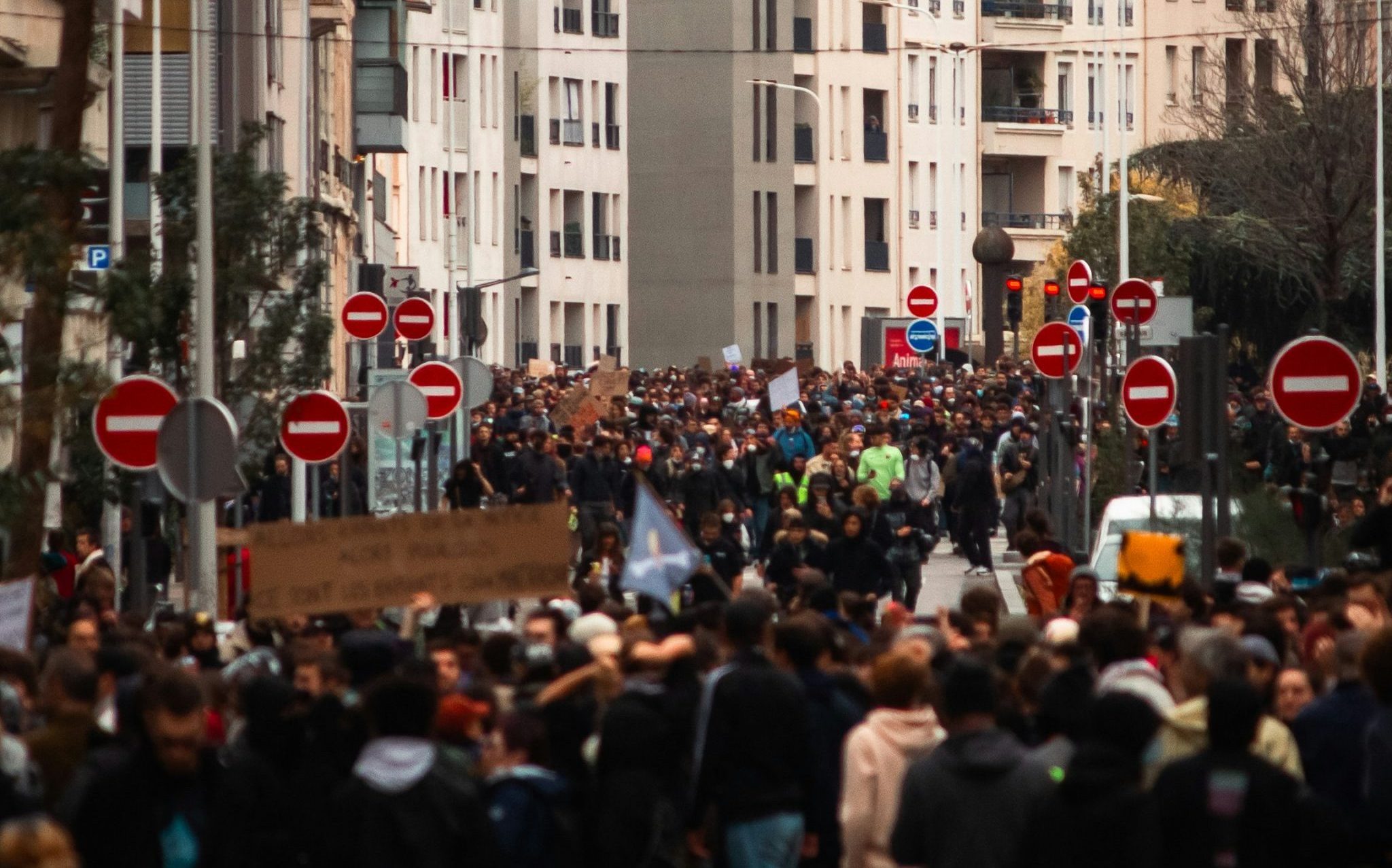
While other student protests arose around Europe, French movements stand out for their significant attendance.
On September 17, teachers at the Antoine de Saint-Exupéry High School in Créteil, a suburb of Paris, blocked the school’s entrance as a protest against a shortage of educational staff.
Since then, public demonstrations and strikes spread across the country, generating a network of solidarity among people of different ages and social classes.
Demonstrators complained about inequality and high living costs, shortages in educational staff, exhausting schedules and dilapidated buildings.
Secondary schools remained the most affected, with some pupils attending classes from 8am to 6pm and often finding themselves in empty classrooms because of the lack of teachers.
Some universities joined education building blockades in solidarity with high school pupils, lamenting an overly selective university admissions system.
Students in their final year of secondary school who want to pursue an academic course defined the application platform “Parcoursup” as opaque and subject to algorithmic selection.
They also raised concerns that applicants cannot see the exact criteria used to assess applications.
Speaking with some students, another factor that widens this inequality even further is the rising cost of living.
Many of them, even the ones who can count on their family’s support, reported struggling to find affordable housing.

L’Union étudiante, France’s leading student union, proposed 10 emergency measures and urged the authorities to implement them immediately.
The proposals reflect growing frustration and intolerance among young people over the current situation.
One of the demands shone a light on police violence against protesters.
The union claimed the government adopted a severe and aggressive approach to preserve public order.
Several witnesses also condemned what they described as the excessive use of force, particularly tear gas during peaceful marches.
The impact of all of this on everyday life was quite significant.
Benedetta, 21, a student in Paris, said she was sometimes afraid to go to certain areas because of the violence.
Many metro lines were blocked, making moving around the city very hard.
She said: “Being a student in Paris during this time has at times been difficult, because you never knew whether you would be able to attend classes in person.”
At Sciences Po, one of the most prestigious universities in Paris, lectures were held entirely online for the first and second weeks of October, provoking tensions among students who found it difficult to concentrate.
“Distance learning can never be compared to in-person learning, so there was considerable disruption to our learning and studying, as well as to our ability to be around classmates,” Benedetta added.
While discontent and anger spread through French cities, students seem to be the ones who are suffering the heaviest consequences.
Far from their university classrooms, they are still waiting for a reaction from those in power.
(Featured image: Photo by vegonaise on Unsplash)
